
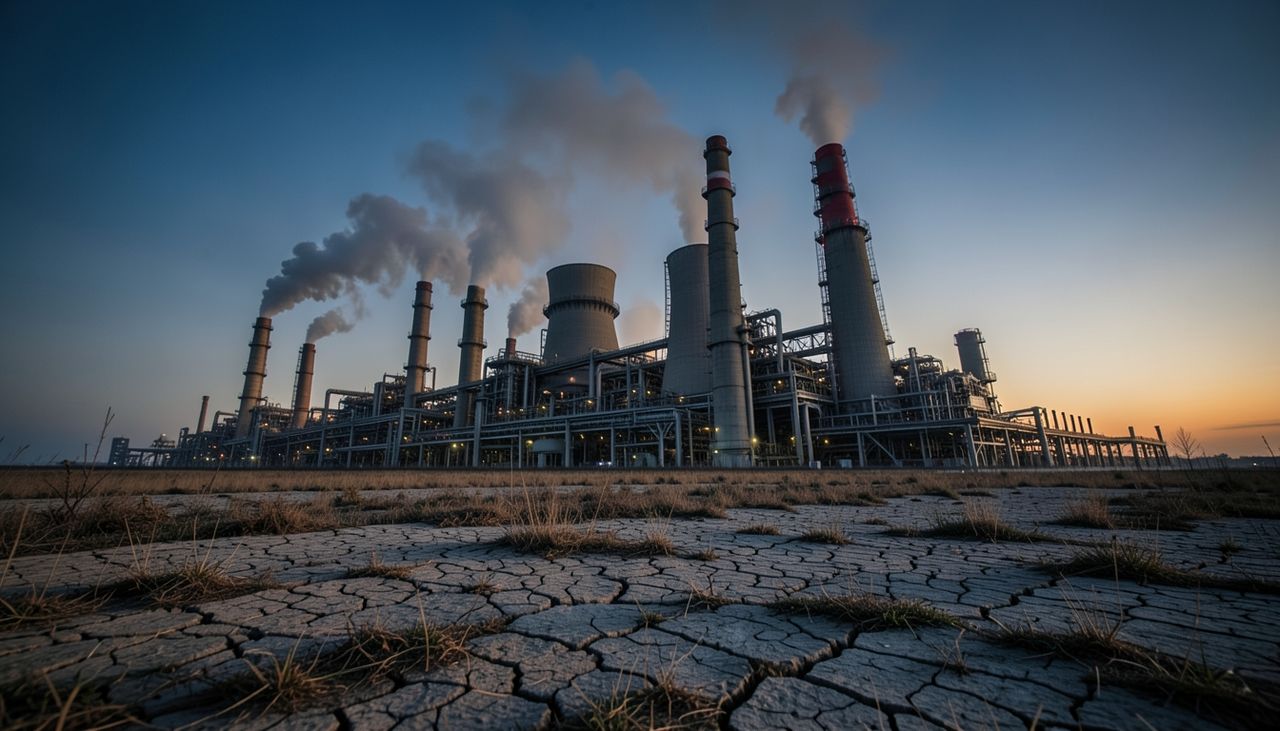
AI-generated illustration
The World Meteorological Organization (WMO) said carbon dioxide and other major greenhouse gases reached unprecedented peaks in 2025, locking in further long-term warming of the planet. In its Greenhouse Gas Bulletin, the agency reported that the global average surface carbon dioxide concentration hit 426.8 parts per million in 2025, equal to 153 percent of the pre-industrial baseline level of 1750.
Concentrations of methane and nitrous oxide linked to human activity also climbed to new records, the report said, while the growth rate of carbon dioxide has tripled since the 1960s.
Record concentrations across major greenhouse gases
The WMO published a new report titled Greenhouse Gas Bulletin on greenhouse gas levels worldwide. The document said atmospheric carbon dioxide and other main greenhouse gases reached unprecedented peaks in 2025, a trend that makes further long-term warming of the planet inevitable.
The global average surface carbon dioxide concentration reached 426.8 parts per million in 2025, which corresponds to 153 percent of the pre-industrial baseline level in 1750. The report also recorded new highs in methane and nitrous oxide concentrations linked to human activities.
Growth rate has tripled since the 1960s
According to the report, roughly half of the carbon dioxide emitted each year remains in the atmosphere, while land ecosystems and oceans absorb the rest. The rate at which carbon dioxide is rising has tripled since the 1960s.
The annual average growth rate of 0.8 ppm (parts per million) reached an annual average of 2.4 ppm in the 2011-2020 period, the report said, and the global average carbon dioxide concentration rose by 2.8 ppm from 2024 to 2025.
WMO officials warn of extreme weather risks
WMO Deputy Secretary-General Ko Barrett said: "One more year, one more record. Greenhouse gases trap unprecedented amounts of heat in the atmosphere, fueling more extreme weather events and the risks that arise for our economies and societies as a result." Barrett added that the 11 hottest years on record have now been left behind and the trend appears set to continue.
Barrett noted that carbon dioxide has a very long lifetime, meaning it will continue to affect the global climate for centuries.
El Nino effect and outlook for 2026
WMO Chief Scientist Oksana Tarasova said the more moderate growth rate seen from 2024 to 2025 reflects the recovery of land carbon sinks after the strong El Nino event of 2023/2024 and a decrease in fire-driven carbon emissions. Tarasova said the El Nino weather event reduces the productivity of the biosphere by causing more severe droughts, drying out vegetation and producing more wildfires.
Tarasova said the 2.8 ppm annual increase in carbon dioxide points to a significant amount added to the atmosphere through fossil fuel use. "In 2026, we can expect to see further increases in atmospheric carbon concentrations, both due to fossil fuel use and the development of a strong El Nino that will affect land carbon sinks, as in 2023/2024," Tarasova said.
Key takeaways
- Global average surface carbon dioxide reached 426.8 ppm in 2025, 153 percent of the 1750 pre-industrial level.
- Methane and nitrous oxide linked to human activity also hit record concentrations, the WMO report said.
- The carbon dioxide growth rate has tripled since the 1960s, with a 2.8 ppm rise from 2024 to 2025.
- WMO officials expect further increases in 2026 from fossil fuel use and a possible strong El Nino.

Join the conversation
Share your thoughts on this story.
Comments
Post a Comment