
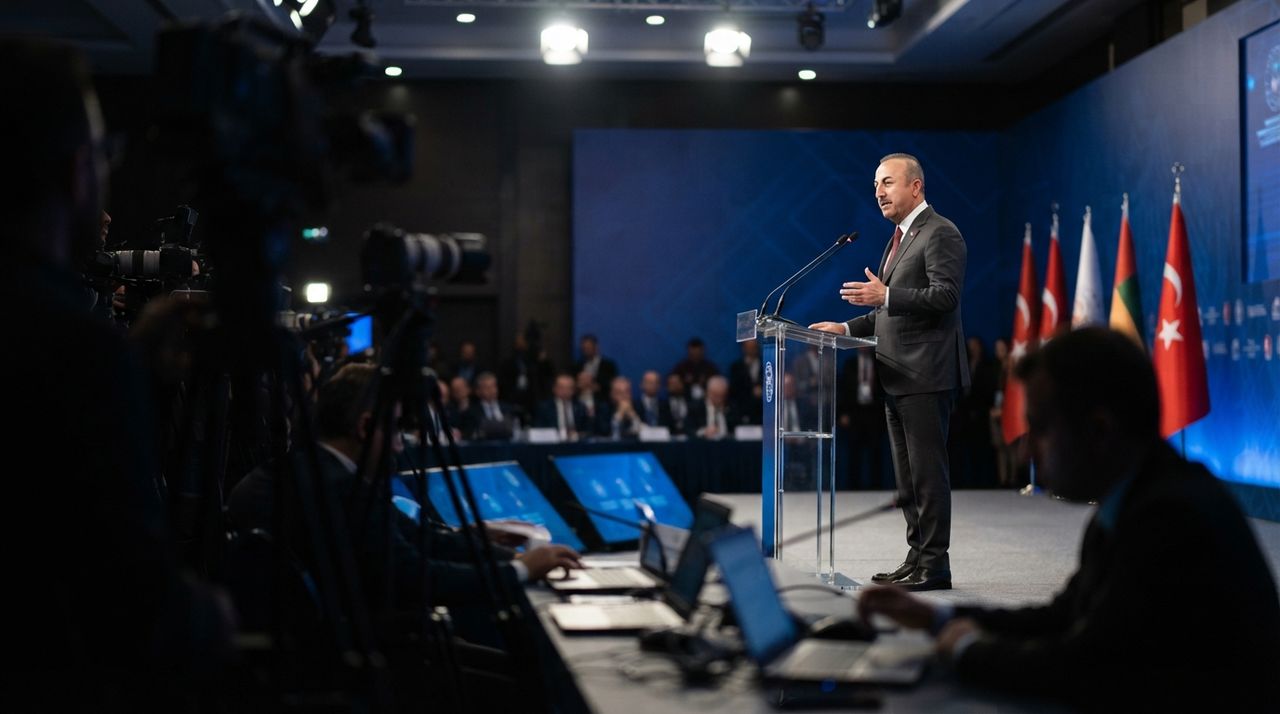
AI-generated illustration
Turkey's Permanent Representative to NATO, Ambassador Basat Öztürk, said Ankara is working with both Russia and Ukraine to reach a temporary, partial ceasefire aimed at stopping attacks on commercial vessels carrying civilian goods in the Black Sea. He made the remarks at a session on security architecture after the Ankara Summit, held during the Turkey-EU Business Summit in Brussels alongside NATO Deputy Secretary General Radmila Shekerinska.
Öztürk noted that Turkey has been a NATO member since 1952 and said alliance unity was the foundation of its Cold War success, a cohesion he argued the Ankara Summit reinforced. He said all 32 allies met there at leaders level and that partners from other regions joined the talks. A pre-summit defense industry forum produced contracts worth roughly $50 billion in a single day, which he said must be translated into real capabilities. Turkey, he added, has NATO's second-largest army and ranks fourth in operational contributions and seventh in common budget payments.
Öztürk said Turkey applies the Montreux Convention and closed the straits to belligerent warships three days after February 24, which he argued prevented the Black Sea from becoming a full battlefield. He warned that strikes on shipping by both sides could trigger crises in energy, food and fertilizer supply, recalling that the Turkey-brokered Black Sea Grain Initiative had worked well and helped avert a global food crisis. He said Turkey monitors the area continuously and supplies allies with 70 percent of the defined maritime and air picture, working closely with Romania and Bulgaria.
Key Takeaways
- Ankara is working with Russia and Ukraine on a temporary, partial Black Sea ceasefire to protect civilian shipping, Ambassador Basat Öztürk said.
- A pre-summit defense industry forum generated contracts worth about $50 billion in one day, which Öztürk said must be turned into concrete capabilities.
- Turkey provides NATO allies with 70 percent of the defined Black Sea maritime and air picture and applies the Montreux Convention to keep the region stable.

Join the conversation
Share your thoughts on this story.
Comments
Post a Comment