
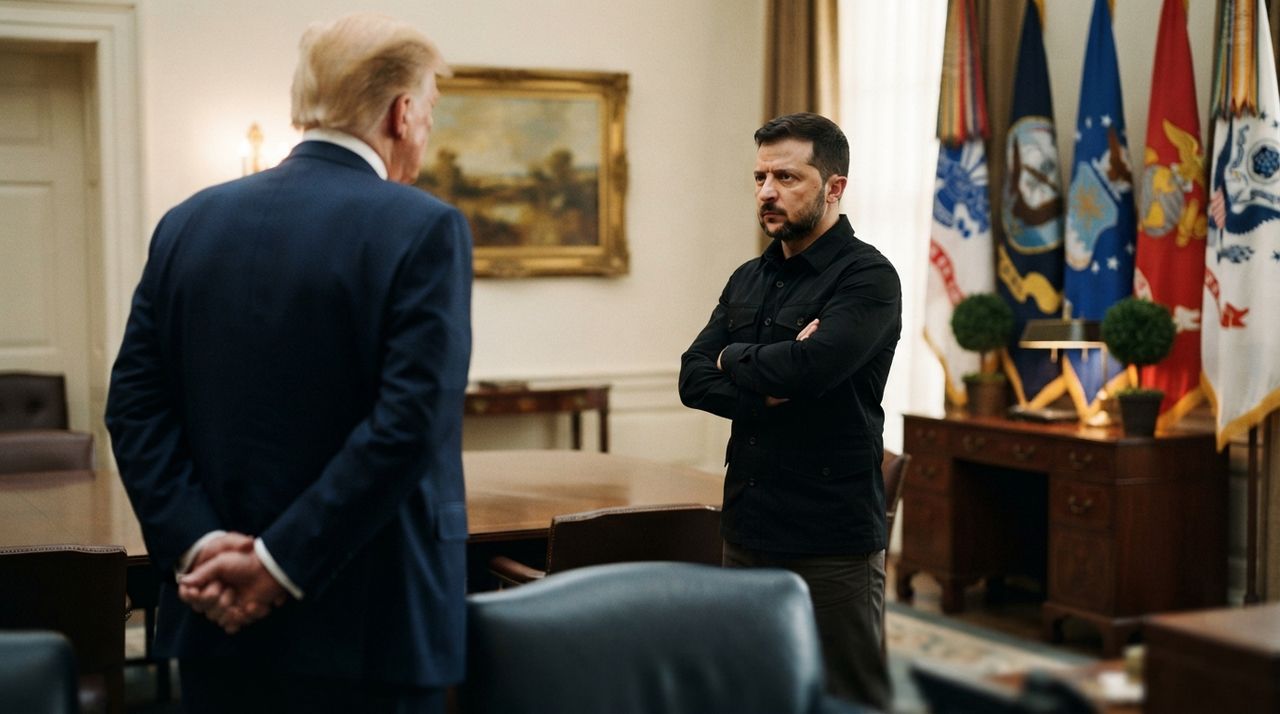
AI-generated illustration
US President Donald Trump and Ukrainian leader Volodymyr Zelenskiy have exchanged sharp criticism while pursuing an uneven path toward ending the Russia-Ukraine war, according to a review of their relationship. Since taking office, Trump has repeatedly targeted Zelenskiy and steered a Ukraine policy distinctly different from Joe Biden's, blaming his predecessor for the conflict and accusing Kyiv of constantly demanding more.
Relations hit a low point at a televised news conference on February 28, 2025, when Vice President JD Vance accused Zelenskiy of disrespect and Trump told him not to dictate how Americans should feel, amid talks on a rare earths deal. Ties later recovered, and the two countries signed an economic partnership in May. Washington also convened the sides in Abu Dhabi and Geneva, hosted a Trump-Putin summit in Alaska in August, and floated a 28-point plan discussed in Geneva on November 23, 2025, but no final settlement emerged.
In 2026, Trump said the parties were close to a deal and secured a temporary truce and prisoner exchange. Disagreements persist over elections, Ukrainian strikes on Russian refineries and a reported US threat to halt intelligence sharing. Trump also announced a ceasefire on energy infrastructure, which Zelenskiy said Russia has since violated.
Key Takeaways
- The February 2025 press conference exposed open friction, with Vance criticizing Zelenskiy and Trump rebuking him over attitudes toward US support.
- A rare earths economic partnership signed in May helped restore ties, even as Geneva talks, an Alaska summit and a US-drafted 28-point plan yielded no final peace deal.
- Latest disputes center on elections, strikes on Russian energy sites and a reported US threat to suspend intelligence sharing, plus a contested energy-infrastructure truce.

Join the conversation
Share your thoughts on this story.
Comments
Post a Comment