
AI-generated illustration
Turkey's Presidency of Defence Industries (SSB) and missile manufacturer ROKETSAN signed a supply contract for the domestically developed ÇAKIR cruise missile, intended to strengthen the strike capability of the Turkish Land Forces.
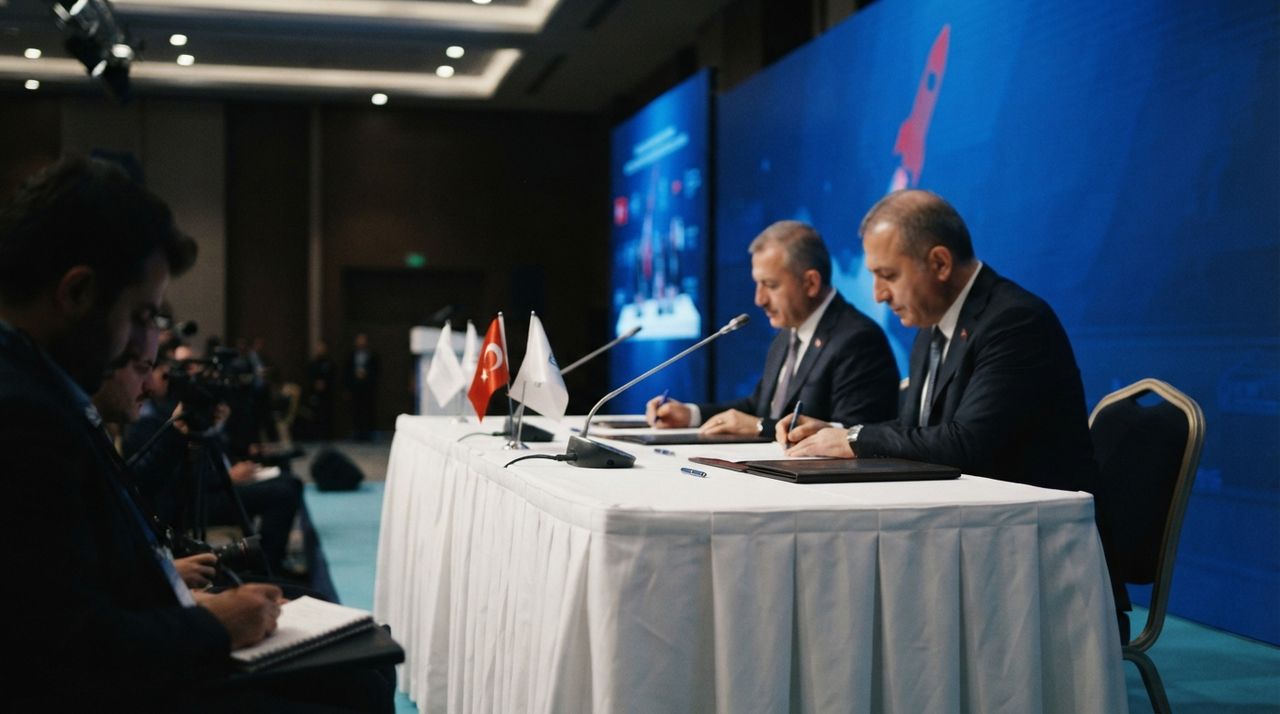
The agreement was signed at a ceremony at SSB by SSB President Haluk Görgün and ROKETSAN General Manager Murat İkinci, moving the missile closer to entering service after a project carried out by ROKETSAN with SSB backing.
Signing ceremony at SSB
The contract for the supply of the ÇAKIR cruise missile was signed by SSB President Haluk Görgün and ROKETSAN General Manager Murat İkinci at a ceremony held at SSB. The deal marks a major step in making the domestically produced missile available for use by the Turkish Land Forces.
ROKETSAN launched the project through its own research and development work, with support from SSB. The missile, built with local and national systems, contributes to Turkey's cruise missile capabilities.
A deterrent and highly capable system
Görgün said at the ceremony that the project gives Turkey a deterrent and highly capable cruise missile. The ÇAKIR programme was realised through ROKETSAN's engineering capability, SSB support and contributions from a broad industrial ecosystem, Görgün said, pointing to significant domestic input in critical components ranging from the missile's seeker head to its turbojet engine.
Görgün said the Land Forces provided important support during qualification and readiness work, and that ROKETSAN's cruise missile capability is followed with appreciation worldwide. Contract processes were completed in line with the decisions taken, Görgün said, thanking all institutions, ROKETSAN employees and subcontractors involved.
Shared architecture with KARA ATMACA
The project produced missile variants in different configurations. ÇAKIR can be used in surface-to-surface and air-to-surface roles and is designed to engage both land and sea targets.
The missile will also be fired from the KARA ATMACA weapon system, which is to enter the Land Forces Command inventory. That integration allows flexible, precise and deep-strike capabilities to be handled within a common system architecture for different operational needs.
Nearly 200 firms involved
Around 200 companies contributed to the project, carried out with wide participation from the domestic defence industry ecosystem under ROKETSAN's prime contractorship. Domestic contributions in critical components such as the seeker head and turbojet engine strengthened Turkey's engineering and production capabilities in defence technologies. The Land Forces Command also supported the project during development and qualification.
Key takeaways
- SSB and ROKETSAN signed the ÇAKIR cruise missile supply contract for the Turkish Land Forces.
- The deal was signed by SSB President Haluk Görgün and ROKETSAN General Manager Murat İkinci.
- ÇAKIR can be deployed surface-to-surface and air-to-surface against land and sea targets, and fired from the KARA ATMACA system.
- Nearly 200 firms took part in the project, with domestic content in the seeker head and turbojet engine.

Join the conversation
Share your thoughts on this story.
Comments
Post a Comment