
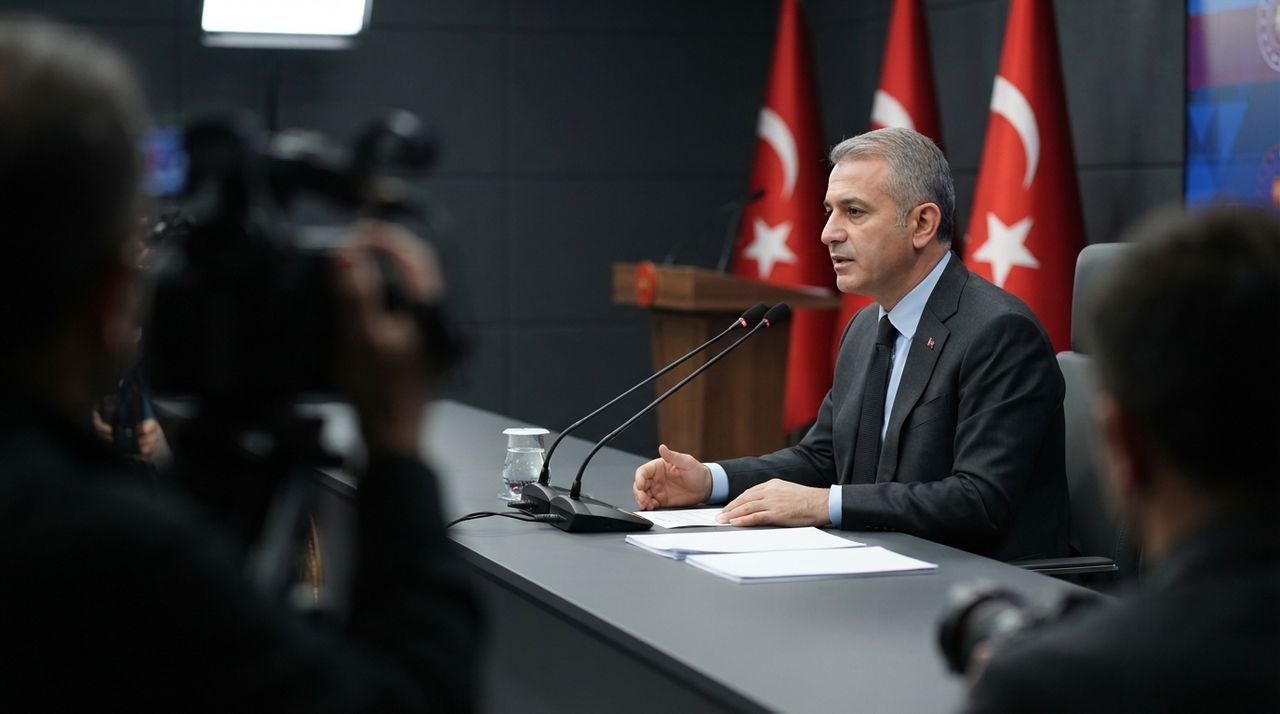
AI-generated illustration
Treasury and Finance Minister Mehmet Şimşek said 66 of the 131 funds placed into liquidation have been fully wound up and that three of the seven portfolio management companies involved have completed full liquidation. Speaking on a joint BloombergHT and Habertürk broadcast, Şimşek said the process is proceeding at the speed and within the framework planned.
Şimşek said a bill on interim payments is being discussed in parliament and that, once it passes, payments of up to 1 million lira will be made quickly depending on the resources available in the funds.
Payouts completed in normal liquidation
Şimşek said transparency, efficiency and fairness were set as the guiding principles of the liquidation, and that the Capital Markets Board (SPK), the Central Securities Depository (MKK) and all other relevant institutions have completed their preparations. The process has been split into normal and extraordinary liquidation.
Normal liquidation was applied to portfolio management companies with relatively manageable financial structures. In total, 131 funds belonging to seven portfolio management companies were placed into liquidation, and 66 of them have been fully wound up. Three of the seven companies have completed full liquidation, with 40.8 billion lira paid out across 45,747 accounts.
Money market fund investors in the three companies whose liquidation was completed received an average additional dividend return of 1.43% compared with September 17, Şimşek said. Investors in equity-heavy funds received on average 58% of their September 17 portfolio value, a 42% lower payment, which Şimşek attributed entirely to falling share prices after valuations had been inflated beyond company fundamentals. Funds without inflated share prices delivered higher returns, he said.
Four companies expected to finish by the weekend
Şimşek said the SPK decided last week to place the funds of Hedef Portfolio Management Company into normal liquidation as well. Hedef has 31 funds, four of them money market funds, and 23,925 accounts in total. The aim is to bring Hedef into the normal liquidation process and complete it this week, he said.
"Most likely by this weekend the normal liquidation of four of the seven portfolio management companies will have been completed," Şimşek said, adding that the process is being managed in a transparent, effective and fair way.
Extraordinary liquidation and priority for small investors
Three relatively large portfolio management companies remain: Tera, Pusula and Atlas, which are currently subject to extraordinary liquidation. Şimşek said the owners of Atlas have been in dialogue with the liquidator for some time and have shown willingness to return assets, values or fund resources taken out of the company. A negotiation process is under way and measures have been taken against the owners. According to the body responsible for the liquidation, some resources were removed from the fund and their return is now being discussed.
Once the bill in parliament is accepted, the process for companies under extraordinary liquidation will prioritise small investors and money market fund investors for payments of up to 1 million lira. About 390,000 accounts could be cleared if payment capacity up to that level exists, Şimşek said, stressing that this figure refers to extraordinary liquidation only.
Recovery of funds and legal action
The Savings Deposit Insurance Fund (TMSF), the Justice Ministry and the MKK have worked together on an algorithm that identified everyone who took part in market-disturbing activities from the creation of the funds to their closure and who benefited from them, Şimşek said. The lists have been handed to TMSF and the Justice Ministry.
Under the process managed by TMSF, 131 accounts were opened for the 131 funds plus one general return account, making 132 in total. Resources will flow into these accounts through voluntary returns, with thresholds already set. Those who made gains of 10 million lira or more in real terms will be contacted first, using an algorithm adjusted for TEFE-TÜFE. Companies and individuals who profited will be invited to return the funds. "If they return them voluntarily there is no problem, if not a legal process will of course be run by our Justice Ministry," Şimşek said.
Investors' remaining rights in the funds are preserved and will be pursued through the courts, Şimşek said, adding that the personal assets of those who acted in coordination will also be targeted.
Banks and companies show limited exposure
Şimşek said the problematic area has been quarantined and contagion contained, with limited direct effects and some possible indirect ones. He said there is no systemic risk, meaning a problem in one or several institutions or one segment of a market does not spread and put the whole economy at risk. Banks' direct exposure to the problematic funds is 1.3 billion lira against banking sector assets of about 56 trillion lira, so no risk to the sector at this point.
The real sector's interaction with these funds equals nine ten-thousandths of assets. Şimşek said he does not underestimate the indirect effects, which spread further than a normal fund market problem because the episode coincided with several global issues. Net outflows from funds since early September stand at about 647 billion lira, including 287 billion lira by foreign investors, but outflows had largely stopped by last Friday.
Money that left the funds moved into deposits, with lira deposit growth of 685 billion lira since early September and the lira share of total deposits rising to 62%. The private sector bond market totals 1 trillion lira, and the portion of that stock maturing by year end is 26.5 billion lira. No public resources will be used, Şimşek said: the Treasury will not be a party or provide guarantees through the Credit Guarantee Fund (KGF), though a credit framework built from KGF's own resources for private sector bonds not touched by manipulation would be viewed positively.
Reform package and MSCI response
Şimşek called MSCI's announcement freezing certain index changes for Turkish shares constructive, saying the timeframe it gave was important and the demands reasonable for a healthy fund and equity market. He said the issues MSCI raised are being addressed, that the fund guide closed many of the gaps used for manipulation, and that further regulation is being prepared with the aim of submitting it to parliament this year. Implementation of the fund guide will not be delayed.
Planned measures include stronger and continuous sanctions for market-disturbing activity, coordinated trades and insider dealing, verification of free float ratios by an independent body, and a decision on whether funds sold to the public should be open on TEFAS. Şimşek said regulatory capacity must be strengthened, including the transfer of several hundred experienced tax inspectors from the Tax Audit Board, which he said has more than 7,100 auditors, under legislation and within a defined process. Sector consultations are expected next month.
Şimşek said he asked to meet the managers of 20 large funds untouched by manipulation to hear their views, while noting that no fund guide would have emerged if sector demands had been followed. He also said the risk of over-regulation will be taken into account. On the wider backdrop, he cited rate increases by the U.S. Federal Reserve since August, tighter global financial conditions, oil prices back at their May peak and interest rates in developed economies at their highest in 20 to 25 years, with some emerging market indices falling as much as 23%. He said Turkey's economy has proven its resilience to shocks over the past three years and that Standard & Poor's and Fitch have commented on the matter.
Key takeaways
- 66 of 131 funds in liquidation have been fully wound up, and three of seven portfolio management companies have completed full liquidation, with 40.8 billion lira paid to 45,747 accounts.
- Tera, Pusula and Atlas remain under extraordinary liquidation; about 390,000 accounts could be cleared with payments of up to 1 million lira.
- Net fund outflows since early September total about 647 billion lira, while lira deposits grew by 685 billion lira and the lira share of deposits reached 62%.
- Banks' direct exposure to the problem funds is 1.3 billion lira against roughly 56 trillion lira in sector assets, with no systemic risk identified.

Join the conversation
Share your thoughts on this story.
Comments
Post a Comment