
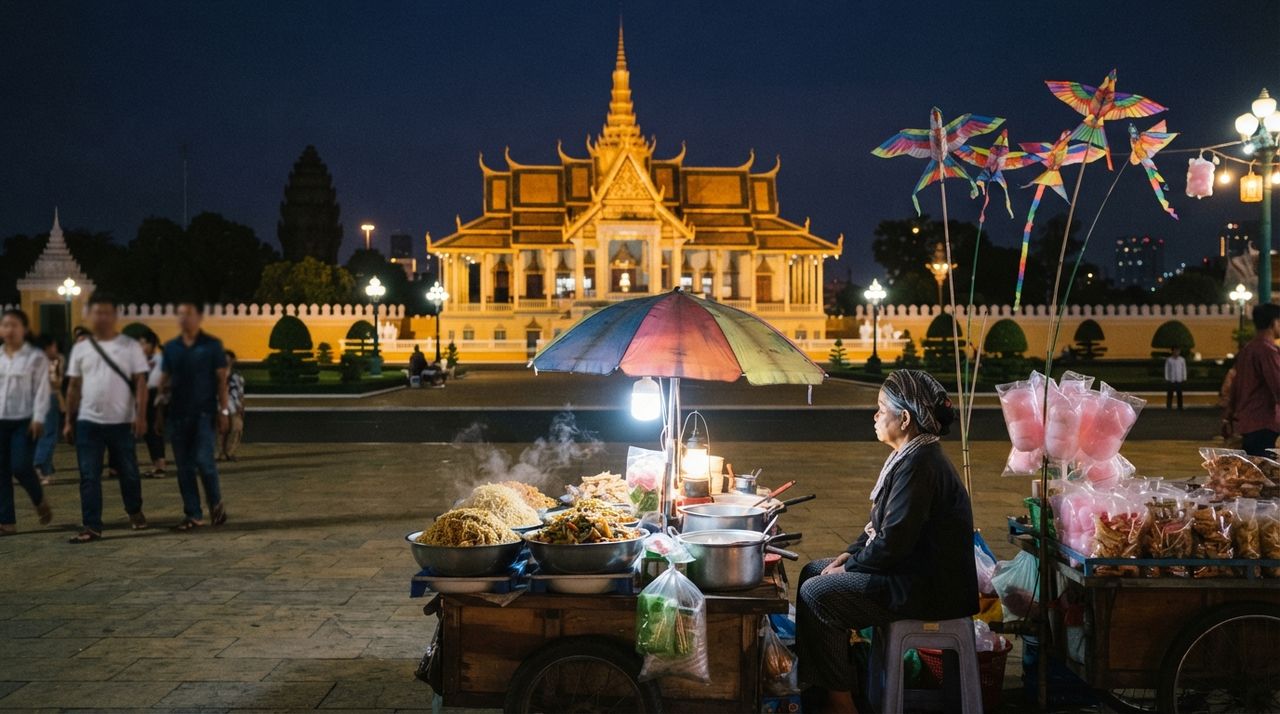
AI-generated illustration
Phnom Penh, Cambodia's political, economic and cultural center with roughly 2.3 million residents, sits at the meeting point of the Mekong, Tonle Sap and Bassac rivers in Southeast Asia. The capital combines longstanding Khmer customs with fast-rising modern construction along its waterfronts and streets.
Daily life is shaped by dense traffic dominated by hundreds of thousands of motorcycles and three-wheeled tuk-tuks, as well as street vendors offering fruit, juices, Kuy Teav noodle soup and grilled snacks. Many households keep modest, functional interiors with little furniture, reflecting a restrained lifestyle that avoids excess consumption.
River fishing remains central to the city's economy and cuisine. Wooden boats set out at dawn with cast nets and bamboo traps, supplying fresh fish for markets and for staples such as Prahok fish paste and Fish Amok. Stilted houses and floating settlements along Tonle Sap stand in contrast to newer buildings rising behind them.
Theravada Buddhism also plays a defining role, with golden-roofed wats serving as neighborhood centers for social support and traditional education. Landmarks include the Royal Palace, the Silver Pagoda and Wat Phnom, where residents gather throughout the day to pray and make offerings.
Key Takeaways
- Phnom Penh, home to about 2.3 million people, lies where the Mekong, Tonle Sap and Bassac rivers converge.
- Motorcycles, tuk-tuks and street food stalls define daily life, while many homes follow a simple, minimalist style.
- River fishing, Theravada Buddhism and landmark temples anchor the city's economy, cuisine and social life.

Join the conversation
Share your thoughts on this story.
Comments
Post a Comment