
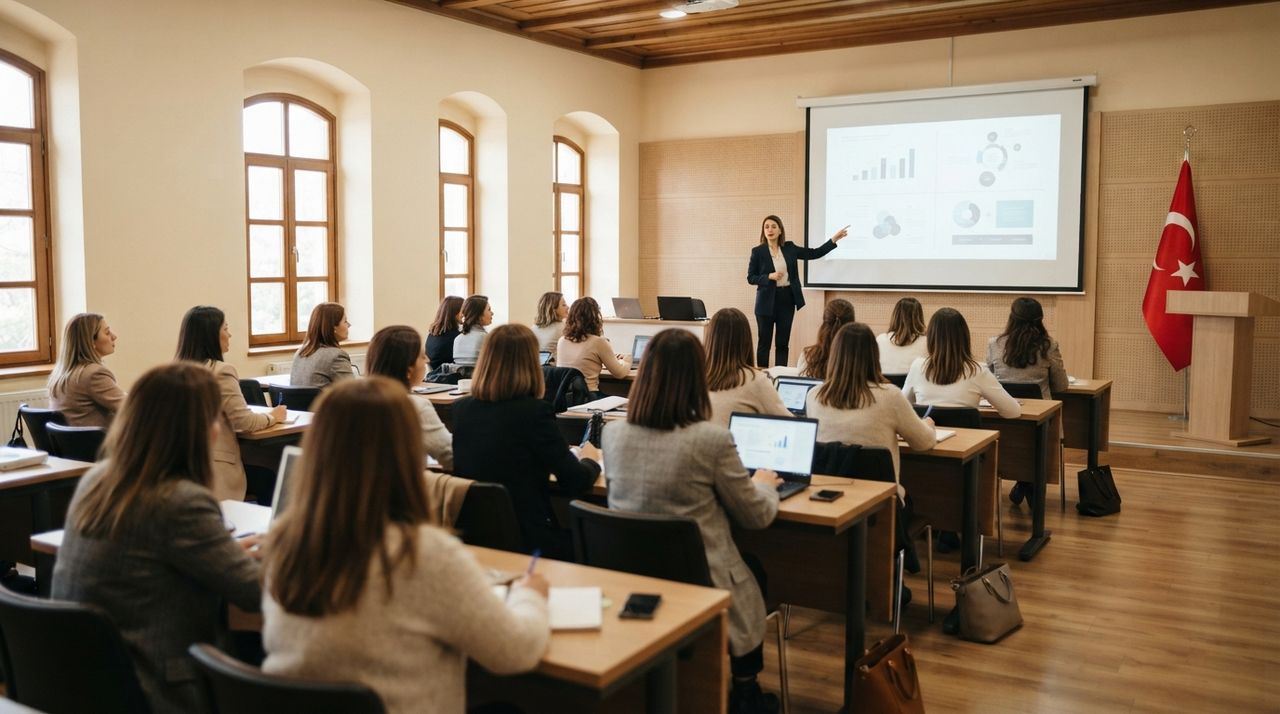
AI-generated illustration
Hitit University's Continuing Education Center (HİTİTSEM) has launched online training for women registered with family support centers (ADEMs) run by the Ministry of Family and Social Services, helping them turn their homes into workshops and sell what they produce. The program explains how participants can benefit from tax exemptions available to women entrepreneurs.
The project was drawn up by HİTİTSEM Director Prof. Dr. Ufuk Gergerlioğlu and piloted at a family support center in Canik, Samsun. After the pilot succeeded, the ministry decided to extend it nationwide, and the first training reached about 1,500 women at ADEMs in 16 provinces of the Black Sea region.
Pilot program in Samsun led to nationwide rollout
Gergerlioğlu prepared the project to revive women's interest in entrepreneurship through tax exemptions. Once the Ministry of Family and Social Services approved it, online training for ADEM members was arranged.
The program was first tested at the family support center in Canik, a district of Samsun. After the pilot proved successful, the ministry decided to spread the project across the country. About 20 women obtained trade tax exemption certificates following the pilot stage.
In the first training session under the expanded project, Gergerlioğlu explained to roughly 1,500 women registered with ADEMs in 16 Black Sea provinces how they can use the tax exemption the state offers to women.
Women urged not to give up on entrepreneurship
Gergerlioğlu told an AA reporter that the project aims to encourage the women entrepreneurs of the future. Turkey has been divided into seven regions for the program, and the first training was held in the Black Sea region. Women who started producing after the pilot training also shared their experiences with new participants.
Legal requirements are among the biggest obstacles to taking the first step in women's entrepreneurship, Gergerlioğlu said. "One of the biggest obstacles to taking the first step in women's entrepreneurship is legal obligations, and that means tax. Out of hesitation, many women entrepreneurs either postpone their ventures or give them up. To help women stop postponing and abandoning their efforts and release their entrepreneurial spirit, we launched this initiative so they can sell products made at home without a tax burden," Gergerlioğlu said.
Gergerlioğlu said the training directs women toward entrepreneurship, and that those who start producing at home may over time move toward forming cooperatives or companies. The aim is to turn women's handiwork into income: "We want to help them contribute to the family budget by selling in person and online, or help them feel fulfilled. Maybe they don't need it financially, but I also see it as a kind of supportive therapy in psychological terms. Valuable products come out of this. It needs to spread to every segment of society," Gergerlioğlu said.
The training program for ADEM members will continue in Turkey's other regions, Gergerlioğlu added.
Compliance with regulations matters when earning income
Selami Topuz, Project Evaluation Department Head at the Ministry's General Directorate of Social Assistance, also attended the first online training event. Topuz said such projects aim to strengthen the family structure and contribute in particular to women's social, cultural, professional and personal development, and stressed that women who produce at home and sell their goods should follow the rules while earning income.
Participant Berna Anbarcı said the handicrafts course had helped improve her skills, and that the training showed a tax exemption certificate could be obtained. Anbarcı added that once sales grow, paying tax would also be welcome.
Key takeaways
- HİTİTSEM offers online training to women registered with ADEMs to help them sell home-made products.
- A pilot in Canik, Samsun, led to about 20 women receiving trade tax exemption certificates.
- The first expanded training reached roughly 1,500 women across 16 Black Sea provinces.
- The program is set to continue in Turkey's other regions.

Join the conversation
Share your thoughts on this story.
Comments
Post a Comment