
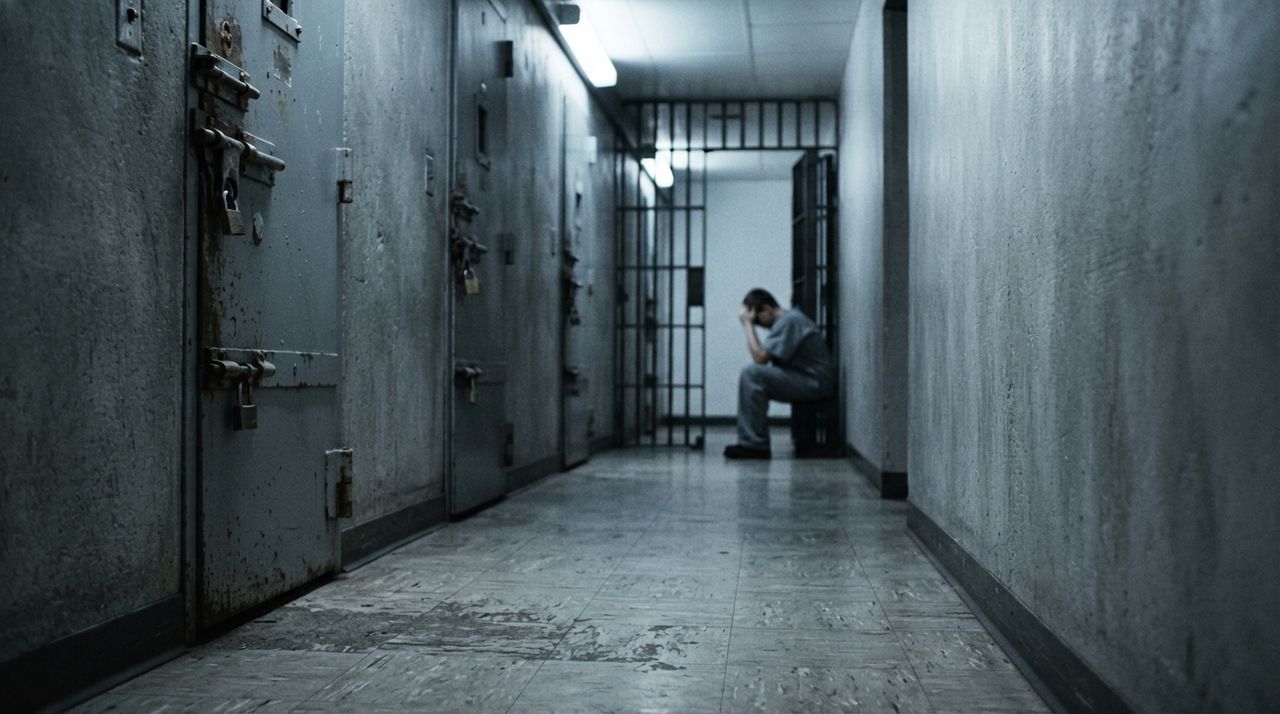
AI-generated illustration
More than half of the Palestinian children held in Israeli prisons were placed in solitary cells at least once in 2025, according to figures released by two Israeli human rights organizations that cited data from the Israel Prison Service.
Of 635 Palestinian children detained over the year, 351 were isolated in single cells, the Public Committee Against Torture in Israel and Parents Against Child Detentions said. The groups reported that 666 cell punishments were imposed on children in total and said the practice is repeated and systematic.
Punishments imposed without court rulings
The statement said 92 percent of the children who were placed in cells had no court decision backing the measure. That group included 115 Palestinian children held under administrative detention, meaning they were kept in prison without any charge being brought against them.
Cell punishment was imposed on some children as many as eight times, the organizations said. In all, 154 children were put in cells more than once during the year, and 42 were held in single cells between four and eight times.
Isolation usually lasting a week
The isolation periods generally lasted seven days without interruption and were extended in some cases to up to two weeks, according to the data.
The Israel Prison Service regulations draw no distinction between adults and children when it comes to cell punishment. The UN Committee on the Rights of the Child prohibits holding children in solitary cells.
Repeated practice causes psychological harm
Titi Carmel, director of Parents Against Child Detentions, told the Haaretz newspaper that cell punishment leaves severe psychological damage on children.
"What is worrying is not only that this punishment is applied, but that it has become a systematic and repeated practice," Carmel said.
Scabies outbreak and worsening conditions
The Haaretz report described a scabies outbreak that has been growing in prisons holding Palestinian detainees since the beginning of 2024, along with deteriorating conditions.
Released prisoners and lawyers said overcrowding in cells, a shortage of cleaning supplies and restricted access to personal hygiene contributed to the spread of the disease. Palestinian prisoners were also given only two items of clothing and, with no area for drying laundry, had to put on wet clothes.
Israel's Prison Service responded that the data did not show cell punishment being handed down because of scabies, and said detainees in need of medical care receive the necessary examinations.
How administrative detention works
Administrative detention allows Israel to imprison Palestinians from the occupied territories without pressing charges. Detainees can be held for up to six months without being told the accusation against them and without the right to defend themselves.
After that period, a Palestinian can be referred to a military court and the detention can be extended repeatedly for up to five years, still without knowledge of the charges.
Since Israel launched its attacks on the Gaza Strip in October 2023, arrests, raids and assaults against Palestinians have increased in the occupied West Bank and East Jerusalem.
Key takeaways
- 351 of 635 Palestinian children held in Israeli prisons were put in solitary cells at least once in 2025
- Cell punishment was imposed 666 times on children in total, with 42 children held in single cells four to eight times
- 92 percent of the children placed in cells had no court decision, including 115 held under administrative detention
- The UN Committee on the Rights of the Child prohibits holding children in solitary cells

Join the conversation
Share your thoughts on this story.
Comments
Post a Comment