
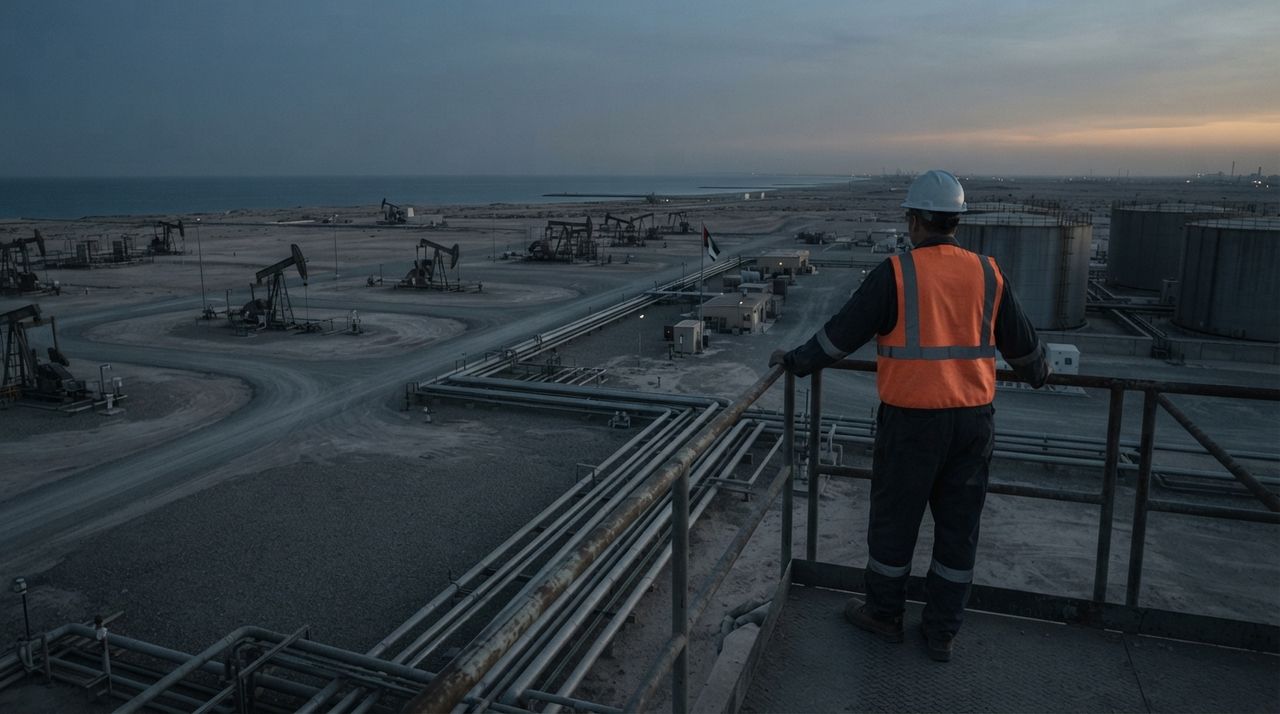
AI-generated illustration
Middle East exports of crude oil and refined products dropped sharply in the week ending October 13, according to data analytics firm Kpler obtained by Anadolu Agency. Shipments loaded from the Strait of Hormuz and the Gulf of Oman, along with crude, oil products and chemical liquids leaving the Red Sea, fell from 21.1 million barrels per day on Oct. 8 to 6.7 million on Oct. 11, 10.4 million on Oct. 12 and 8.3 million on Oct. 13. The seven-day average stood at 17 million barrels, below the roughly 23.3 million recorded before the war.
The main driver was a slump in commercial transits through the Strait of Hormuz to their lowest level since July 22. Only six vessels crossed on Oct. 12, compared with 32 on Oct. 8, 24 on Oct. 9, 11 on Oct. 10 and 12 on Oct. 11. The UK Maritime Trade Operations and international maritime security sources recorded at least 14 attacks, attempted attacks and obstruction incidents in and around the strait between Oct. 5 and 12, with six ships targeted on Oct. 12 alone.
Shipping through the Bab el-Mandeb Strait, linking the Red Sea to the Gulf of Aden and the Indian Ocean, fluctuated as concerns mounted over Houthi actions against Saudi Arabia. Transits there stood at 35, 41, 39, 46 and 32 vessels from Oct. 8 to Oct. 12. Experts warn that a large-scale supply disruption at Bab el-Mandeb occurring simultaneously with one at Hormuz could put greater pressure on markets.
Key Takeaways
- Middle East crude, oil product and chemical exports fell to 6.7 million barrels per day on Oct. 11 from 21.1 million on Oct. 8, Kpler data show.
- Only six commercial ships transited the Strait of Hormuz on Oct. 12, the lowest level since July 22, amid a surge in attacks.
- Experts warn that simultaneous major supply disruptions at the Hormuz and Bab el-Mandeb straits could further strain global energy markets.

Join the conversation
Share your thoughts on this story.
Comments
Post a Comment