
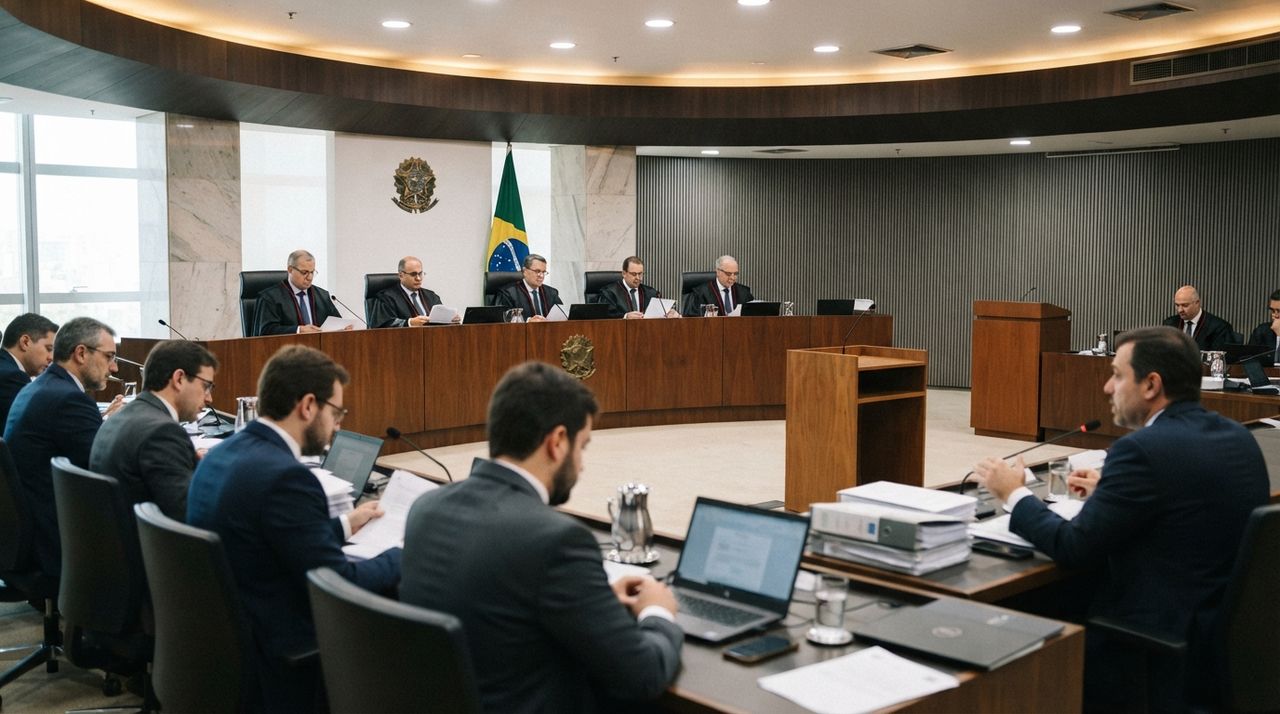
AI-generated illustration
Meta said it had treated the candidates in Brazil's presidential runoff equally, responding to a demand from Brazil's Superior Electoral Court (TSE) for proof that the campaigns received the same treatment. The company rejected allegations of political bias, manipulation or deliberate interference in the Brazilian vote.
The statement came after complaints about the visibility of the digital campaigns of Workers' Party (PT) candidate President Luiz Inacio Lula da Silva and Liberal Party (PL) candidate Flavio Bolsonaro were taken to court.
Meta sets up manual review system for ad accounts
Meta said it had taken comprehensive measures to comply with election advertising rules and to protect the integrity of the democratic process in Brazil. The company added that it had created a dedicated review system ensuring that any automatic blocking or restriction applied to presidential campaign ad accounts is checked manually within two hours.
The company stressed that operational problems stemmed from technical limits rather than favoritism, and denied any claim that it had engaged in political bias, manipulation or deliberate interference in the Brazilian elections. A spokesperson for the Brazilian electoral court, Tatiana Cochlar, confirmed that Meta's reply had been received.
Court gave Meta 24 hours to produce evidence
The Superior Electoral Court (TSE) had ordered Meta to submit, within 24 hours, information and documents showing that the runoff candidates' campaigns were treated equally. The electoral alliance backing Lula da Silva had alleged that content distribution systems on Meta's platforms disadvantaged posts aligned with its political line and gave greater visibility to material from the rival campaign.
TSE Justice Marco Aurelio Bellizze said Meta had not sufficiently demonstrated that it followed instructions on equality and neutrality between the candidates, and set the 24-hour deadline. Bellizze asked the company for information on how content recommendation systems work, on reach data for the two candidates' election advertising, and on reviews targeting networks of inauthentic accounts.
Candidates also asked for outside investigations
Lula da Silva had approached the Federal Police, the Prosecutor General's Office and the United Nations (UN) Human Rights Council's special rapporteur for freedom of expression on 17 October, seeking an investigation into whether rival Bolsonaro gained economic and financial advantages in content production and distribution through Meta's platforms. The race between Lula da Silva and Bolsonaro is described as one of the most contested presidential elections since Brazil returned to democracy in 1985.
Polls point to a tight finish
Brazilian voters go to the polls on 25 October to choose the president and the governors of six states. The latest polls put Flavio Bolsonaro at 51 percent and incumbent President Lula da Silva at 49 percent. Bolsonaro's support slipped slightly before the runoff, and the contest is expected to be neck and neck.
In the first round held on 4 October, right-wing candidate Bolsonaro took 47 percent and Lula da Silva won 45.1 percent.
Key takeaways
- Meta told Brazil's Superior Electoral Court (TSE) that it treated both presidential runoff candidates equally and denied political bias or deliberate interference.
- TSE Justice Marco Aurelio Bellizze gave Meta 24 hours to show equal treatment, data on ad reach and content recommendation systems, and reviews of fake account networks.
- Meta set up a system to manually review any automatic blocks on presidential campaign ad accounts within two hours.
- Polls show Flavio Bolsonaro at 51 percent and Lula da Silva at 49 percent ahead of the 25 October vote.

Join the conversation
Share your thoughts on this story.
Comments
Post a Comment