
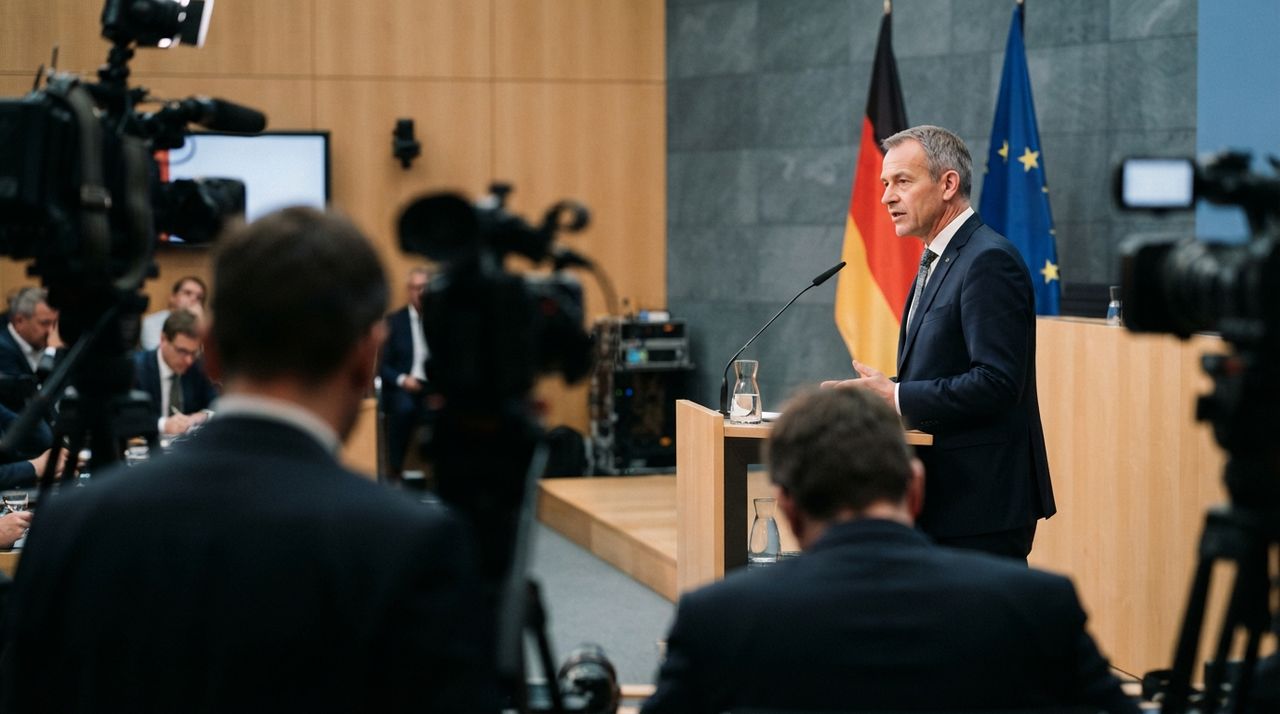
AI-generated illustration
German Chancellor and Christian Democratic Union (CDU) leader Friedrich Merz said at a Berlin press conference that a diesel fuel export agreement between the United States and Russia could not apply to Germany or Europe. He added that Moscow will negotiate seriously only under pressure, and that sanctions would remain in force.
Merz argued that sanctions should be tightened further over Russian attacks on Ukraine's civilian energy supply. He said Russia has rejected peaceful proposals and responded to US President Donald Trump's energy ceasefire initiative with intensified strikes on Ukrainian civilian infrastructure, while assuring President Volodymyr Zelenskiy that he can rely on Germany and Europe.
Representatives of Germany, France and Britain met the US administration over the weekend, Merz said, adding: "We are looking for a common path on how we can contribute to ending this war. There are differing views on some issues." He stressed that Berlin is not a neutral mediator and will keep supporting Ukraine.
Merz also said the CDU board agreed to ease the economic burden on citizens, including cutting the electricity tax to the EU minimum level. He plans to propose former Rhineland-Palatinate Premier Alexander Schweitzer as labour minister after Bärbel Bas resigned. In Berlin, he urged the Greens and SPD to end coalition talks with the Left Party, citing concerns over antisemitism.
Key Takeaways
- Merz says a US-Russia diesel fuel export deal cannot apply to Germany or Europe and that sanctions will continue.
- He calls for tougher sanctions over Russian attacks on Ukraine's civilian energy infrastructure and vows continued support for Kyiv.
- Merz urges Berlin's Greens and SPD to drop coalition talks with the Left Party and proposes Alexander Schweitzer as labour minister.

Join the conversation
Share your thoughts on this story.
Comments
Post a Comment