
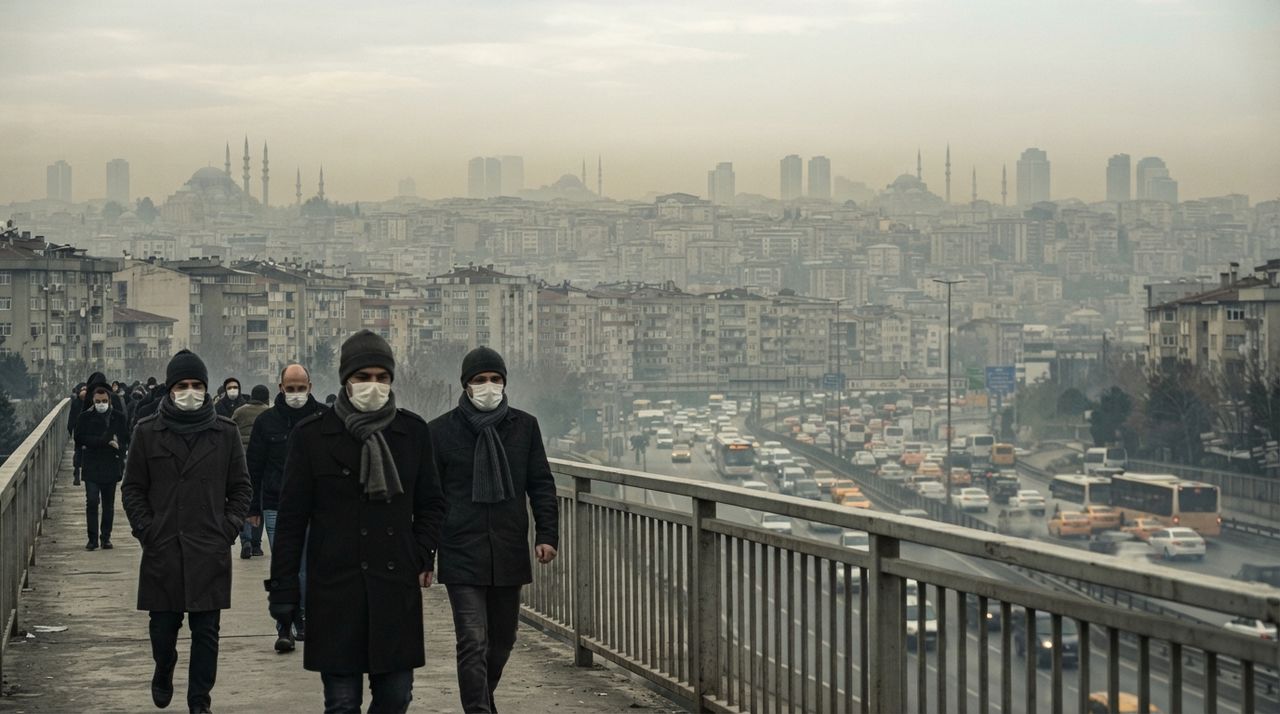
AI-generated illustration
Upper respiratory infection cases in Istanbul have started to climb with the arrival of autumn and the reopening of schools, according to Istanbul Provincial Health Director Associate Professor Abdullah Emre Güner.
Güner told the Anadolu Agency (AA) that about 559,000 people have come to hospitals with upper respiratory complaints over the past month, while noting that the trend matches last year's figures and that hospital bed capacity is not under strain.
What is driving the increase
Güner said the change of seasons and the opening of schools have increased contact among children, raising the likelihood that upper respiratory infections will spread. Children are more likely to bring viruses or infection agents into homes once classes resume, Güner said.
Shifts in air temperature, the use of air conditioning and heating, and insufficient attention to clothing, nutrition and sleep routines also contribute to the rise in infections, according to Güner. Viral and microbial infections can run a more severe course in people with chronic illnesses, frail or bedridden older adults, and other citizens, Güner said, and the necessary precautions should be taken.
559,000 hospital visits in a month
Güner said upper respiratory infections in Istanbul have risen as expected with the onset of autumn. "In the past month, about 559,000 people applied to our hospitals with upper respiratory infection complaints," Güner said.
Compared with last year, the situation is following expectations, according to Güner. "We are not facing an increase compared to last year. At the moment we have no problems with our bed occupancy rates or intensive care occupancy rates," Güner said.
Güner added that without the necessary precautions, infections can cause weakness, fatigue and more hospital visits even when they do not run a fatal course, and that the aim is to take action before illness occurs.
Precautions and vaccination
Güner urged citizens to eat well and keep a regular sleep routine. When symptoms such as a runny nose, cough and sore throat appear, measures should be taken to keep transmission to a minimum, Güner said. Rooms should be aired frequently, and children with fever, a runny nose or a sore throat should return to school only after they have recovered.
Sleep and nutrition are among the important measures against upper respiratory infections, Güner said. Infections tend to run a mild course in middle-aged people and children, while fatal cases can occur in frail, bedridden and chronically ill older adults, according to Güner.
Güner stressed the importance of getting flu vaccines before illness appears. Older people and those in risk groups can get prescriptions from their family doctors and obtain the vaccines free of charge from pharmacies, Güner said.
Capacity prepared for winter
Güner said Istanbul has made its preparations for the winter and autumn period, with 46,000 inpatient beds and more than 6,000 intensive care beds available. The city's hospital capacity has proven itself during epidemic and earthquake periods, according to Güner.
Istanbul also has an early warning system that monitors possible outbreaks and increases in cases, Güner said, adding that officials are tracking the situation through that system.
Key takeaways
- About 559,000 people sought hospital care for upper respiratory complaints in Istanbul over the past month, according to health director Abdullah Emre Güner.
- The rise follows expectations and does not exceed last year's levels, with no problems in bed or intensive care occupancy rates.
- Officials point to cooler weather, heating and air conditioning use, school reopening and weak sleep and nutrition habits as contributing factors.
- Istanbul has 46,000 inpatient beds and more than 6,000 intensive care beds, and flu vaccines are available free of charge through family doctor prescriptions.

Join the conversation
Share your thoughts on this story.
Comments
Post a Comment