
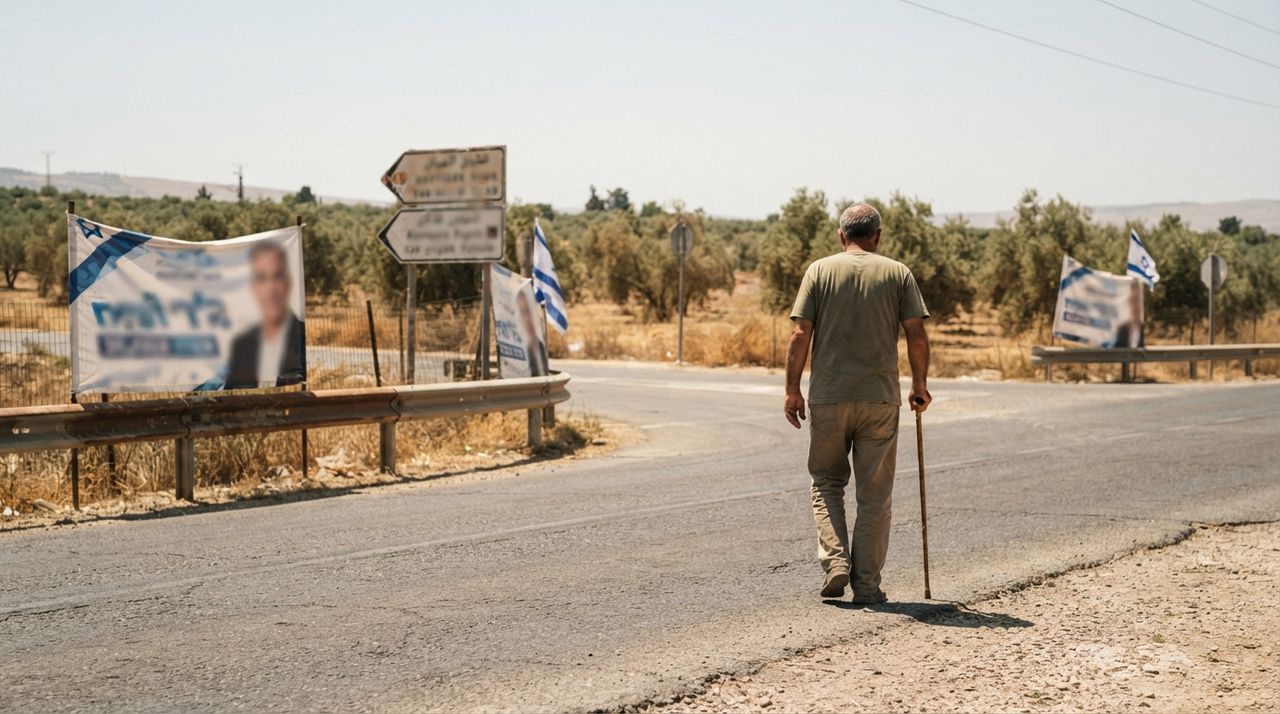
AI-generated illustration
The first year of the Gaza ceasefire agreement has coincided with Israel's general elections scheduled for Oct. 27, leaving the deal's future in doubt as experts weigh possible scenarios for what follows the vote and the formation of a new government, according to an Anadolu Agency (AA) report.
Experts outline several paths: talks could stall until early 2027 while a new Israeli cabinet is formed, or the United States could step in after the November congressional midterm elections to gradually break the impasse, with mediators pushing to prevent escalation and a full Israeli occupation of Gaza. Meanwhile mediators are also working to increase humanitarian aid until the US votes are over, other regional files — notably Iran — are resolved, and an Israeli government is in place.
Palestinian affairs expert Tarek Fahmi told AA the vote would bring no momentum to the deal, describing the choice as a contest between "bad and worse" and warning that failure to form a majority could produce a paralysing unity government. Egypt's Ahmed Fouad Anwar and Palestinian analyst Nizar Nezzal similarly expected only limited change, while noting the ceasefire has been marred by continued Israeli strikes, restricted aid and a stalled second phase, with 1,445 Palestinians killed and 5,072 wounded since it took effect.
Key Takeaways
- Israel's Oct. 27 elections could delay progress on the Gaza ceasefire until at least early 2027, experts say.
- Mediators aim to prevent a full Israeli occupation of Gaza and to boost humanitarian aid amid harsh winter conditions.
- Analysts describe the vote as a choice between "bad and worse," with a unity government seen as the worst outcome.

Join the conversation
Share your thoughts on this story.
Comments
Post a Comment