
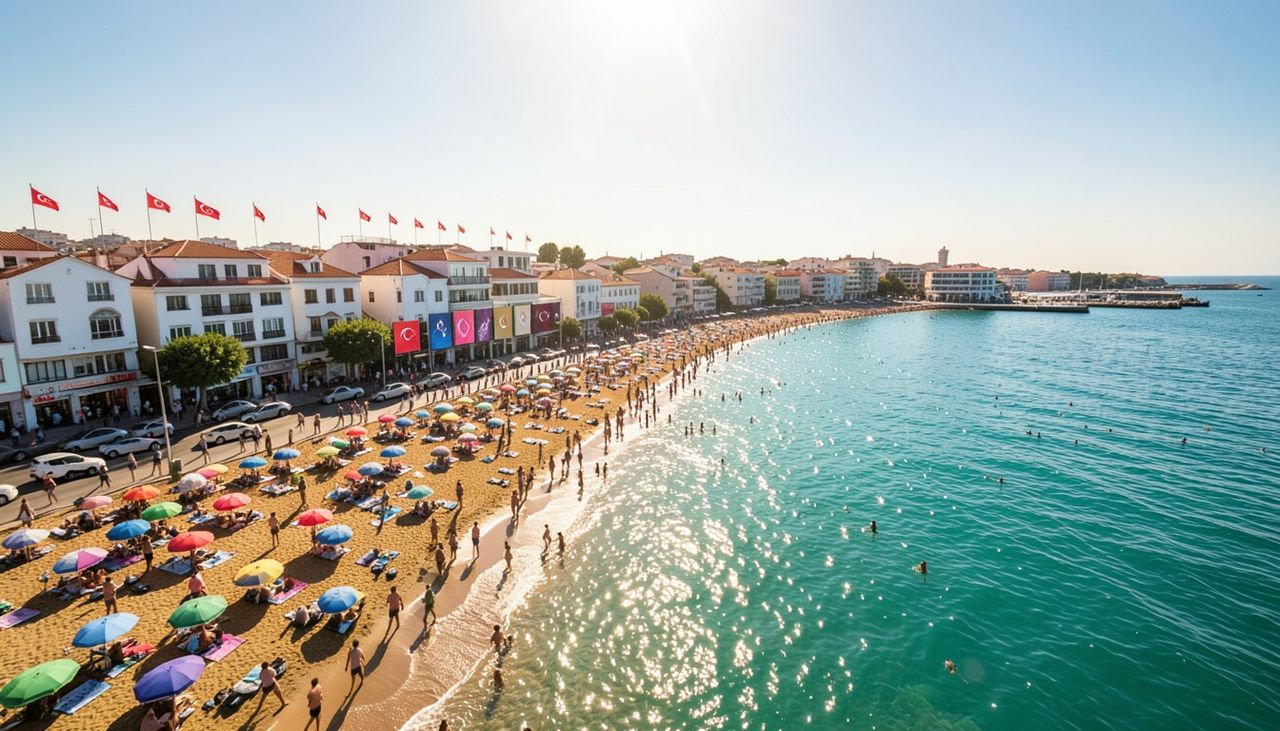
AI-generated illustration
Culture and Tourism Minister Mehmet Nuri Ersoy said Turkey's tourism revenue for the first nine months of 2026 reached $51.278 billion, up 2.4 percent from the same period last year, while third-quarter revenue rose 5 percent to $25.526 billion. Both figures are the highest tourism earnings recorded in any third quarter and any January-September period in the history of the Republic.
Ersoy presented the third-quarter and nine-month results at a press conference held at the Atatürk Cultural Center, saying the sector continued to welcome visitors despite regional conflicts, airspace restrictions and rising transport costs.
Visitor numbers and spending
Turkey hosted 23.374 million visitors in the third quarter of 2026 and 49.132 million in the first nine months of the year, Ersoy said. Russia, Germany and the United Kingdom sent the most visitors between January and September, with 5.7 million arriving from Russia, 5.17 million from Germany and 3.2 million from the United Kingdom.
The average length of stay was 10.69 nights in the third quarter and 10.34 nights over the nine-month period. Average spending per person per night across all visitors rose 4.6 percent year on year to $107.7 in January-September, while third-quarter spending averaged $106.9. Foreign visitors spent an average of $119.9 per night and Turkish citizens residing abroad spent $72.2.
Regional tensions weigh on travel
Ersoy said international travel remained subject to a sensitive process since the start of the year, as conflicts in the region, rising tensions in various locations and restrictions on airspace use disrupted international transport networks. Suspended services on some routes, changed flight paths and harder connecting journeys affected tourism flows, while higher energy prices increased airline costs and added pressure on travel demand.
"Turkey stood out as a safe tourism destination despite the negative developments in its region," Ersoy said, adding that the country's state capacity, diplomatic reach and work for peace and stability kept it an island of stability. He said international transport links, tourism infrastructure and service quality allowed Turkey to keep hosting guests from around the world, and that protecting the trust placed in the country was a basic priority of its work.
Wider markets and promotion
Ersoy said steps taken since 2018 to strengthen the sector's resilience included the establishment of the Turkey Tourism Promotion and Development Agency (TGA), which gave promotion efforts a continuous and systematic structure. Expanding source markets and diversifying tourism products formed the basis of that approach, with options offered in culture, archaeology, gastronomy, sports, health, congress and nature tourism.
That diversity allowed the ministry to shift work toward other markets when one slowed and to replan promotion and marketing as conditions changed, Ersoy said. "This is exactly what we mean by building immunity: seeing risks in advance, preparing to limit their effects and taking the necessary steps on time," he said. The goal, he added, is to spread demand across Turkey's 81 provinces and the whole year, so visitors see more cities, stay longer and generate income that reaches local businesses, tradespeople and employment more widely.
Through the TGA, promotion continues on television, digital platforms, outdoor media and global travel platforms, with visibility maintained on CNN, BBC, Bloomberg, Euronews, Al Jazeera and Eurosport. Digital campaigns reached 7.1 billion impressions in 74 countries. Ten mini series aired in 2025-2026 reached 10.5 billion impressions, with new productions covering Cappadocia, Bodrum, Izmir, Ankara, the Southeast and the Eastern Black Sea. The Legacy for the Future project, night museum visits and the Türkiye Culture Route Festival were cited as ways of adding reasons to visit different destinations.
Sector support and the year ahead
Ersoy said promotion and product development were handled together with transport options, in close cooperation with the airline sector led by Turkish Airlines and with tour operators, assessing booking trends, flight plans and capacity needs together and taking market-focused steps where needed. The Tourism Support Package, employment support and the reduction in accommodation tax implemented under President Recep Taytup Erdoğan's leadership were meant to ease firms' access to finance and protect jobs, he said.
In the period ahead, Ersoy said efforts will be intensified in high-growth markets including the United States, Canada, Asia, Africa and Australia while the position in main markets is maintained. Cooperation with airlines and tour operators will aim at preserving existing capacity, adding new direct flights and extra seat capacity, and promotion will focus more on converting activity into bookings and sales. Greater use of data and artificial intelligence is planned to track demand, changing visitor preferences and campaign results, he said.
Ersoy closed by saying the sector worked together through the year's challenges and acted in time, and that the results of efforts to expand product and market diversity and strengthen the sector's immunity against crises are now visible.
Key takeaways
- Turkey's January-September tourism revenue rose 2.4 percent to $51.278 billion, and third-quarter revenue climbed 5 percent to $25.526 billion, both records in the Republic's history.
- The country hosted 49.132 million visitors in the first nine months of 2026, with Russia, Germany and the United Kingdom the leading source markets.
- Average spending per person per night reached $107.7 in the nine-month period, up 4.6 percent year on year.
- Ten mini series aired in 2025-2026 drew 10.5 billion impressions, and digital campaigns reached 7.1 billion impressions across 74 countries.

Join the conversation
Share your thoughts on this story.
Comments
Post a Comment