
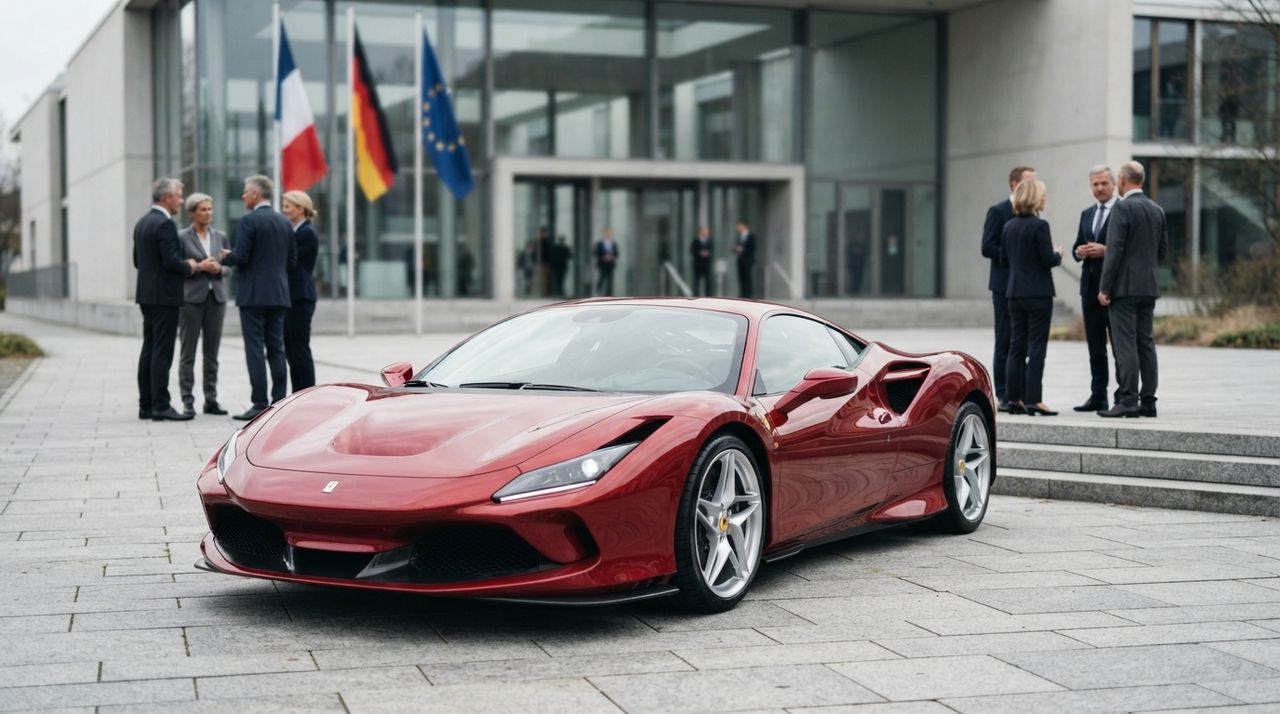
AI-generated illustration
German Chancellor Friedrich Merz and French President Emmanuel Macron have reached a joint position to further soften the European Union's planned ban on internal combustion engines, according to German business daily Handelsblatt. Talks on the details of the plan, which Paris and Berlin have broadly agreed on, are continuing.
Current EU legislation requires new car CO2 emissions to be cut by 100 percent by 2035, effectively phasing out combustion engines. The European Commission had already proposed lowering that target to 90 percent. The Merz-Macron plan goes further, seeking an additional 10-point reduction without any balancing conditions. With balancing options included, the emissions cut could fall to as low as 80 percent, giving manufacturers far more room to sell combustion-engine vehicles. Intermediate targets may also be relaxed: instead of a 55 percent cut by 2030, producers would receive a five-year transition period from 2028 to 2032 to avoid penalties.
Germany needs French support to secure the required majority in the EU Council. Handelsblatt reported that Berlin is prepared to make concessions on France's protectionist industrial policies, accepting strict EU-origin rules under the Industrial Acceleration Act's "Buy European" requirement. State incentives for electric vehicles would apply only to cars largely built within the EU. The European Parliament's Transport Committee is expected to draft a compromise proposal within the next two weeks.
Key Takeaways
- Merz and Macron back cutting the EU's 2035 emissions target by a further 10 points, beyond the Commission's proposed 90 percent.
- A five-year transition period from 2028 to 2032 could replace the 2030 interim target, helping makers avoid penalties.
- Germany accepts "Buy European" rules and EU-only EV incentives in return for French backing in the EU Council.

Join the conversation
Share your thoughts on this story.
Comments
Post a Comment